Using the Library
Understanding the Library's Role
Elumity's Library serves as your comprehensive document management center where you store, organize and access all your research materials. Think of it as a sophisticated digital filing system that not only holds your documents but also maintains their relationships to references, Knowledge Cards and your academic writing projects.
The Library handles multiple file formats including PDFs, Word documents, PowerPoint presentations, images and videos. It also includes unique capabilities like converting web pages directly into PDFs for permanent archival, making it easy to preserve online resources that might change or disappear over time.
Navigating Your Workspace Organization
Before diving into document management, you need to understand how Elumity organizes your workspace. Your content is structured around "Spaces" - dedicated work environments that can be either private or collaborative.
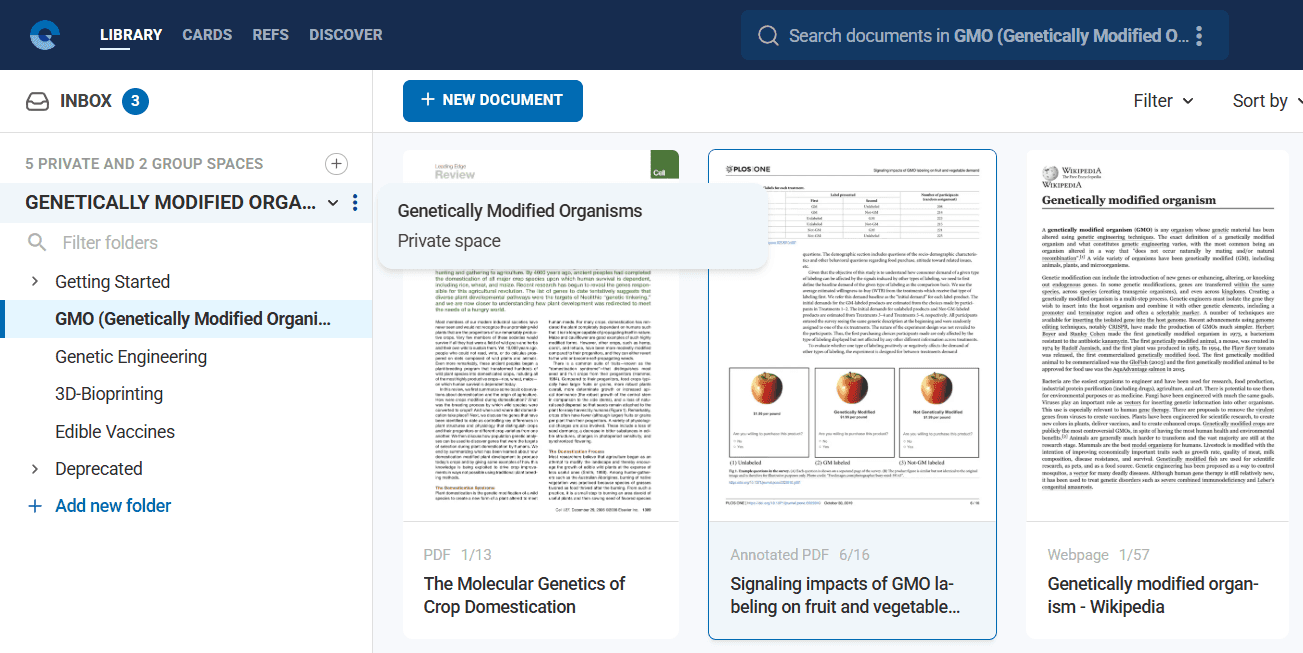
The left sidebar shows your organizational structure. At the top, you'll find your Inbox, which contains documents that other Elumity users have shared with you. Below that, you'll see counters showing how many private and group spaces you belong to, along with options to create new spaces.
When you click on a space name, you enter that workspace and can see its folder structure. Each space can contain multiple folders and folders can contain subfolders, creating a hierarchy that matches your research organization needs.
Setting Up Your Document Organization
Effective document management starts with thoughtful organization. Consider how you want to structure your research materials before uploading large numbers of documents.
Creating Spaces and Folders
If you need a new workspace for a research project or topic area, click the plus icon next to your space counters. Choose between a private space (just for you) or a group space (for collaboration with others).
Within any space, you can create folders to organize related documents. Click "Add new folder" at the bottom of the folder list in the sidebar. Give your folder a descriptive name that will make sense to you later - for example, "Methodology Papers" or "Clinical Trial Data" rather than generic names like "Research" or "Papers."
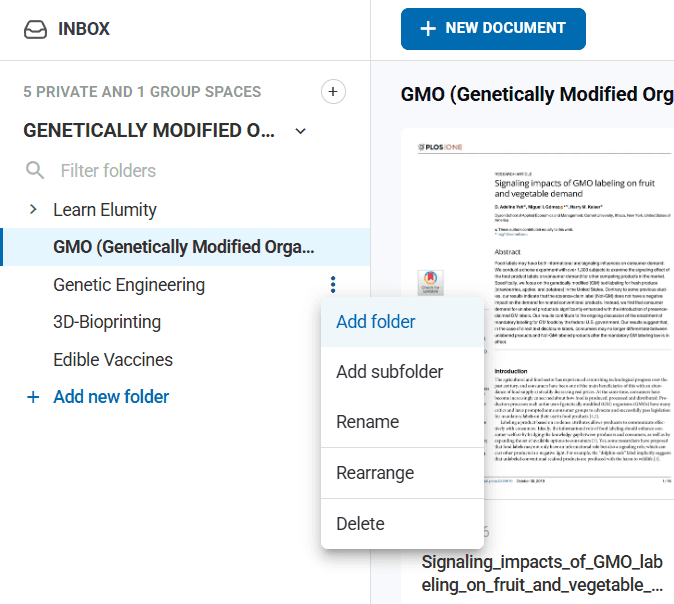
To create subfolders within existing folders, click the three-dot menu next to any folder name and select "Add subfolder." This hierarchical structure helps when you're working on complex projects with multiple research areas or when you need to separate different phases of a project.
Folder Management
As your research evolves, you might need to reorganize your folder structure. The three-dot menu next to each folder provides options to rename folders, rearrange their order, or delete folders you no longer need.
When renaming folders, choose names that will be clear to you months later when you're looking for specific materials. Include key identifying information like the research topic, methodology, or timeframe.
Uploading Documents to Your Library
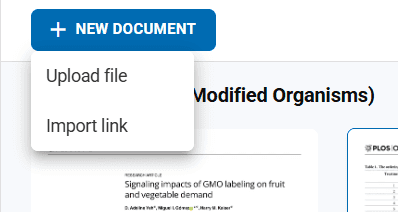
The primary way to add content to your Library is through the "New Document" button, which appears prominently in the main content area when you're in any space or folder.
Standard File Upload
Click "New Document" and select "Upload a file" to add documents from your computer. The file picker supports academic document formats including Word documents, PDFs, PowerPoint presentations, images and videos.
Choose files that are relevant to your current research project. When uploading academic papers, make sure you have the legal right to store them in your personal library. Many institutional subscriptions allow personal academic use, but it's important to respect copyright guidelines.
Web Page Conversion
One of Elumity's unique features is the ability to convert web pages directly into PDFs for permanent storage. Select "Import a link" from the New Document options, then paste the URL of the webpage you want to preserve.
This feature is particularly valuable for capturing:
- News articles related to your research topic
- Government reports and policy documents
- Blog posts or opinion pieces that provide context
- Online resources that might change or be removed over time
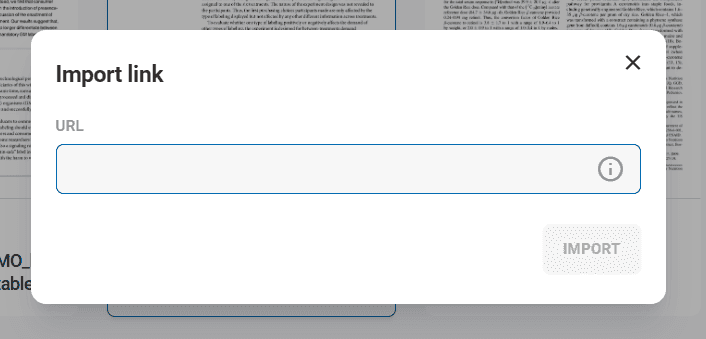
The system downloads the webpage and converts it into a PDF that becomes part of your permanent library. This ensures you always have access to the content even if the original webpage changes or disappears.
Understanding Document Display and Management
Once you have documents in your Library, Elumity provides multiple ways to view and interact with them.
Document Grid View
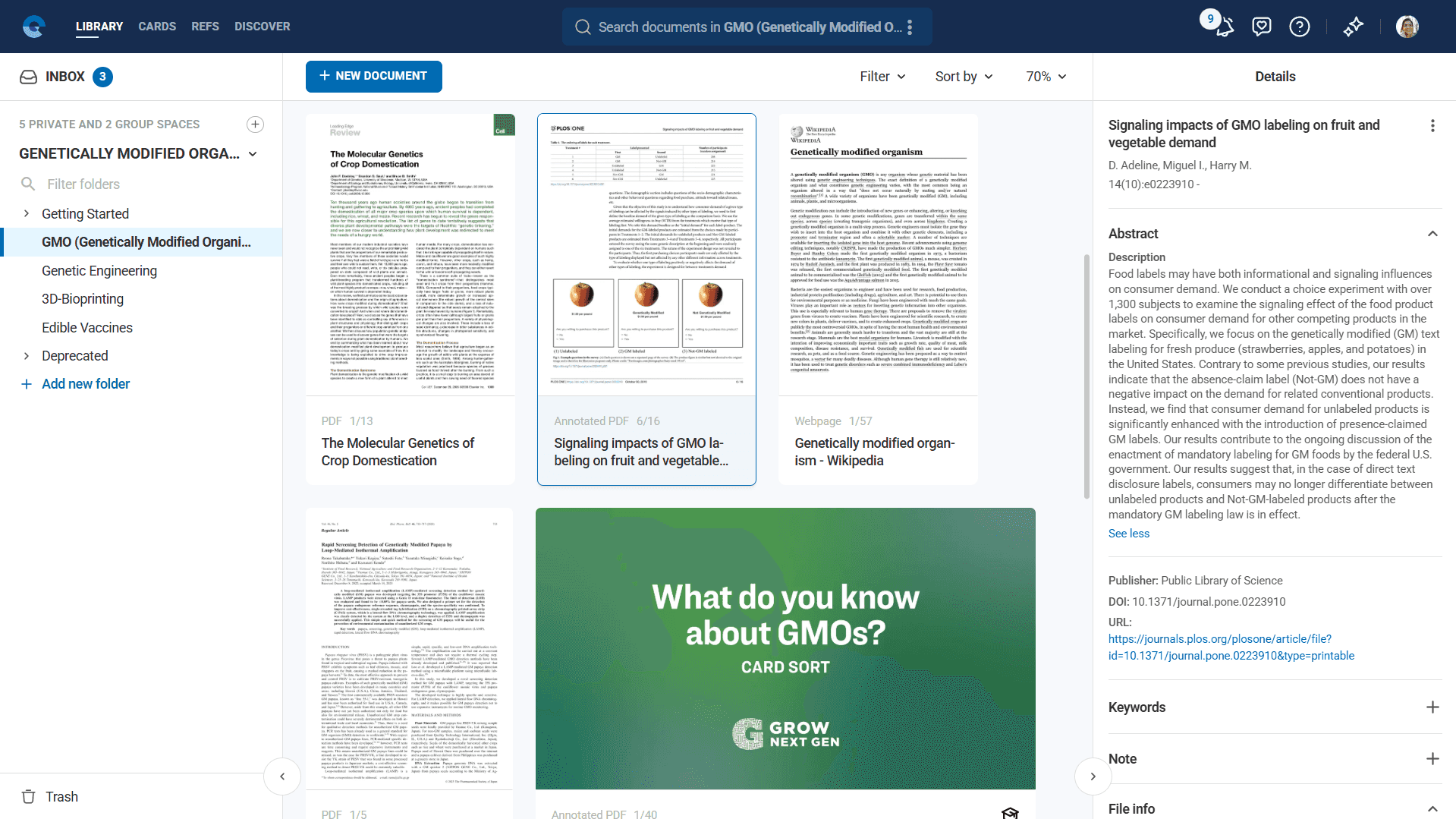
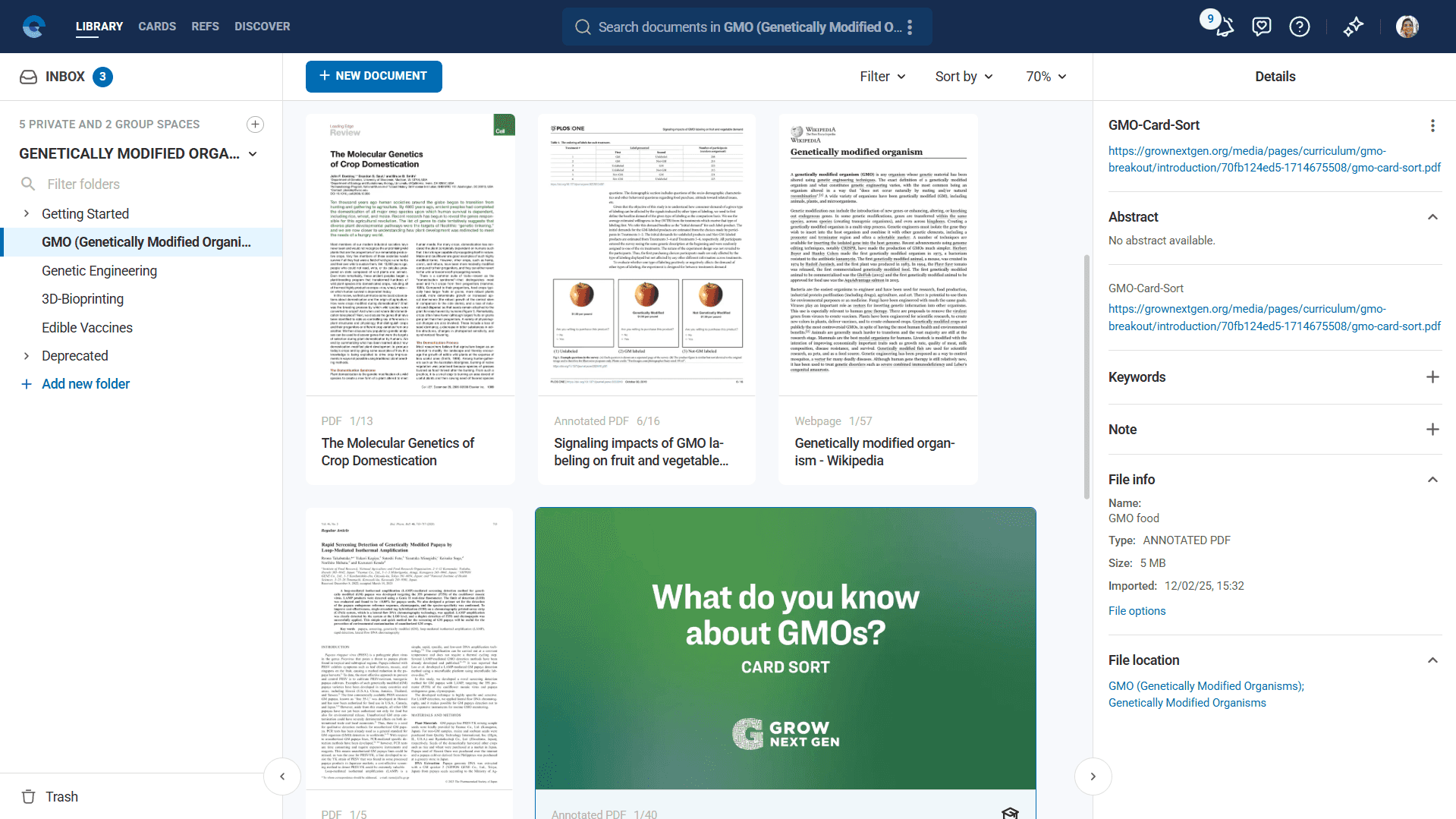
By default, your documents appear in a grid layout with thumbnail previews. Each document shows a preview of its first page or cover, making it easier to identify specific documents visually.
The thumbnail size can be adjusted using the view options in the toolbar. Choose larger thumbnails when you want to identify documents by their visual content, or smaller thumbnails when you need to see more documents at once.
Document Information Display
Each document thumbnail includes essential information: the document title, file type and any tags you've applied. Look for small icons that indicate special document properties - for example, a link icon shows documents imported from web pages.
Working with the Metadata Panel
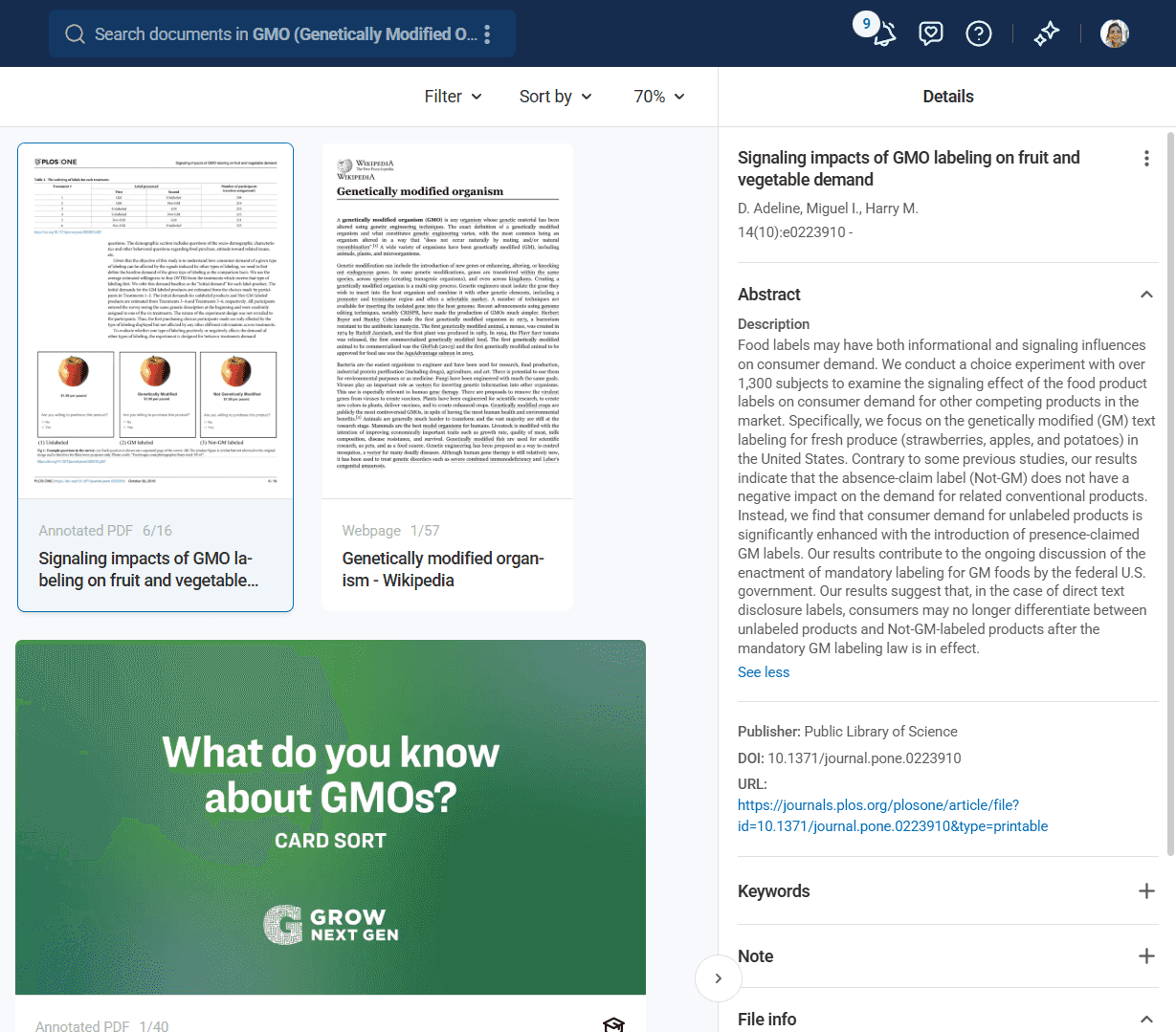
When you click on any document, a detailed metadata panel appears on the right side of your screen. This panel contains comprehensive information about the selected document and provides tools for citation management.
Citation and Reference Information
The metadata panel displays the document's title and any available citation information. You'll find options to copy the DOI (Digital Object Identifier), which provides a permanent link to the original publication.
For academic papers, the system often automatically extracts citation information including author names, publication dates, journal names and other bibliographic details. You can edit this information if needed to ensure accuracy.
Reference Export Options
The citation tools in the metadata panel allow you to export reference information in various formats. "Copy to BibTeX" creates citations compatible with LaTeX and many reference managers. "Copy full reference" provides a complete formatted citation, while "Copy abbreviated reference" gives you a shorter version for quick use.
The "Go to PubMed" option provides direct access to the paper's PubMed entry when available, making it easy to find related papers or access additional information from the National Library of Medicine database.
Reference Style Selection
Click "Reference options" to access over 10,000 citation styles. Common options include APA (American Psychological Association), Chicago Manual of Style, IEEE (Institute of Electrical and Electronics Engineers) and JAMA (Journal of the American Medical Association).
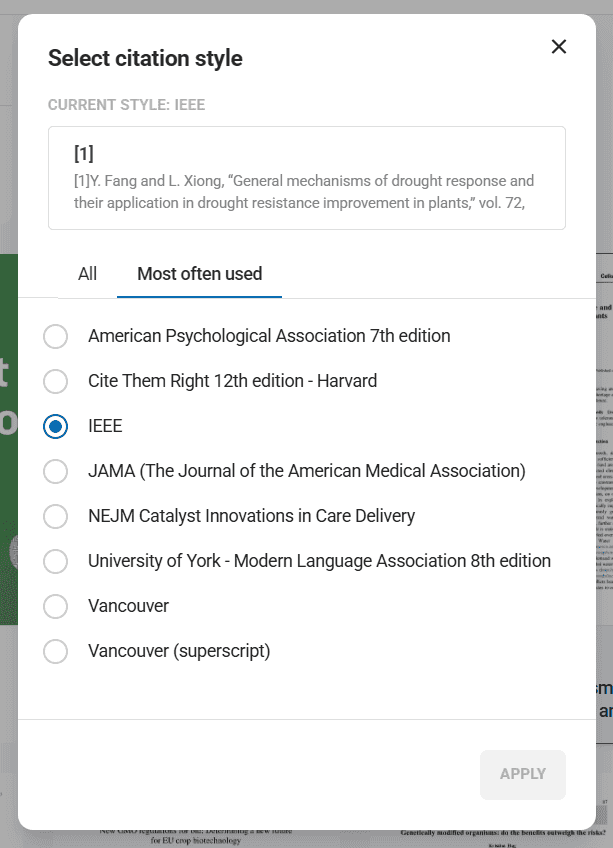
Choose the style that matches your field or the specific requirements of your writing project. The system automatically formats citations according to your selected style.
Document Organization Tools
Effective document management requires robust sorting, filtering and tagging capabilities.
Filtering Your Documents
The filtering system helps you find specific types of content quickly. Click the filter options in the toolbar to narrow down your document display.
Filter by document type to show only PDFs, office documents (Word, Excel, PowerPoint), media files (images and videos), or web pages. This is particularly useful when you're looking for a specific type of content or when you want to review all documents of a particular format.
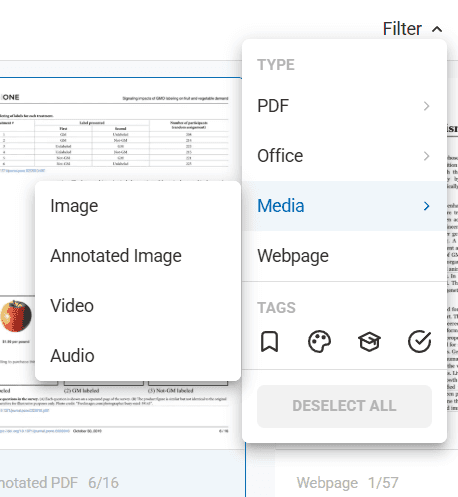
The tag filtering system works with Elumity's four-tag system. Each document can have one of four customizable tags applied to it and you can filter to show only documents with specific tags. Use tags consistently across your library to create an effective organizational system.
Sorting Your Document Collection
The sort options help you arrange documents in logical orders depending on your current needs. Sort by "Recent" to see recently accessed documents first, which is helpful when continuing work on active projects.
Sort by "Date created" to see documents in chronological order, which helps when you're reviewing how your research has developed over time. "Title" sorting creates alphabetical organization, while "Type" sorting groups similar document formats together.
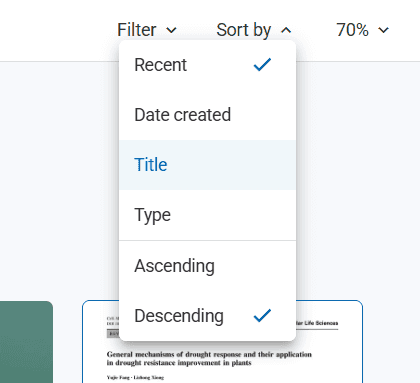
Each sort option can be applied in ascending or descending order, giving you flexibility in how information is presented.
Advanced Document Operations
Beyond basic viewing and organization, Elumity provides sophisticated tools for working with your documents.
Individual Document Actions
Right-click on any document or use its three-dot menu to access a comprehensive set of management options. "Open" launches the document in Elumity's advanced PDF viewer or appropriate application.
"Set cover" lets you choose which page of a multi-page document appears as the thumbnail preview. This is particularly useful for research papers where the title page might not be the most informative preview.
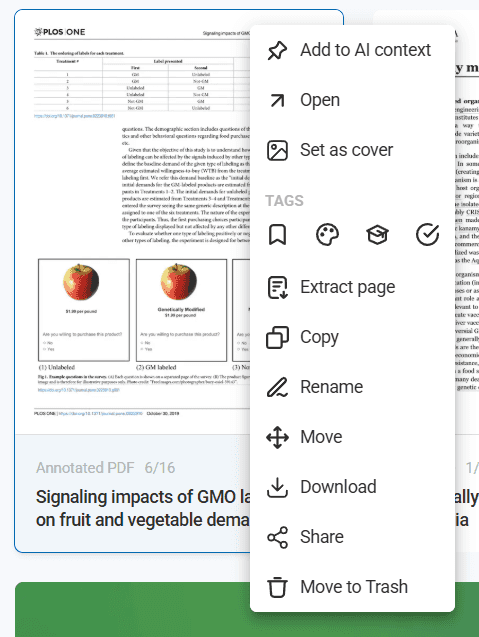
"Extract pages" creates a new PDF document containing only the pages you select from the original. This feature is valuable when you want to create focused documents containing only the most relevant sections of longer papers.
Bulk Document Management
Select multiple documents by clicking their checkboxes or using standard multi-select techniques (Ctrl+click or Cmd+click). Once you have multiple documents selected, additional options become available for batch operations.
"Merge" combines multiple PDF documents into a single file, maintaining the order you specify. This is useful for creating comprehensive literature review documents or combining related papers into themed collections.
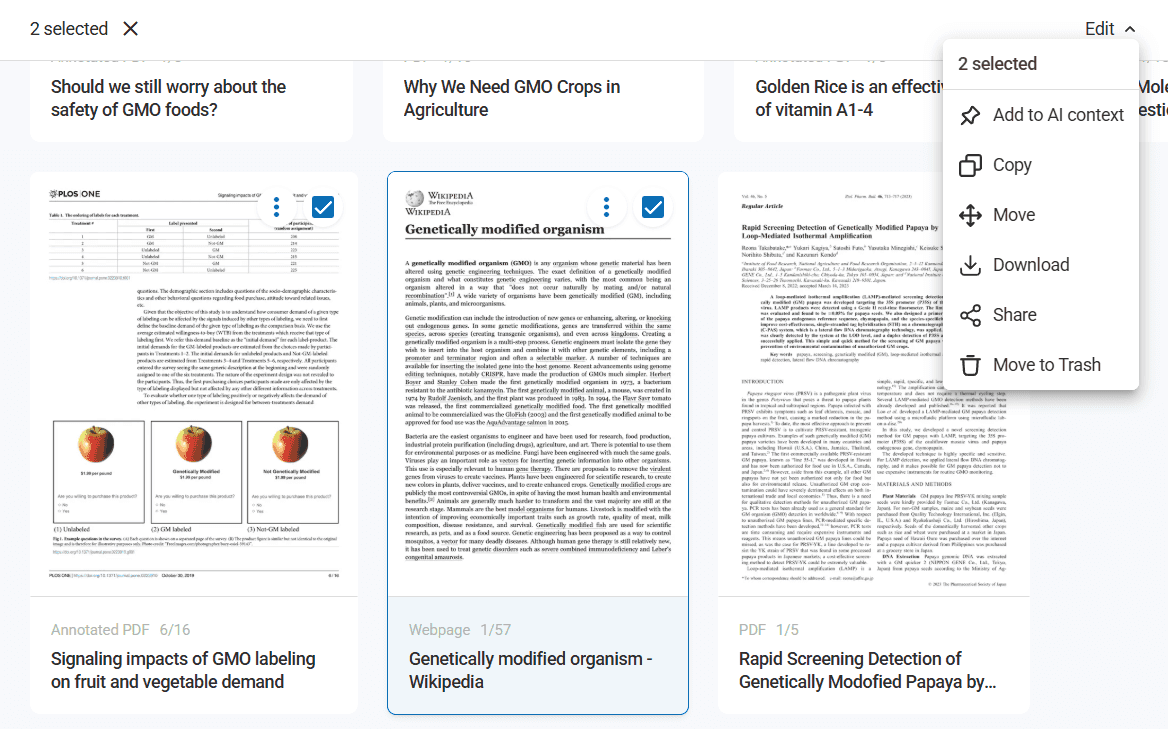
Batch operations also include copying multiple documents to different folders, moving groups of documents and applying bulk sharing or deletion operations.
Citation and Academic Integration
The Library seamlessly integrates with Elumity's reference management system, ensuring your documents maintain their academic context.
Reference Connection
Many documents in your Library connect to entries in your References module. When a document has an associated reference entry, you'll see a small indicator in the metadata panel.
This connection means citation information flows between modules. When you cite a document in a Knowledge Card or academic paper, the system uses the reference information from your Library to ensure accurate citations.
Metadata Enhancement
You can enhance documents by adding keywords, notes and other metadata through the details panel. Keywords make documents more searchable and help you identify related materials across your library.
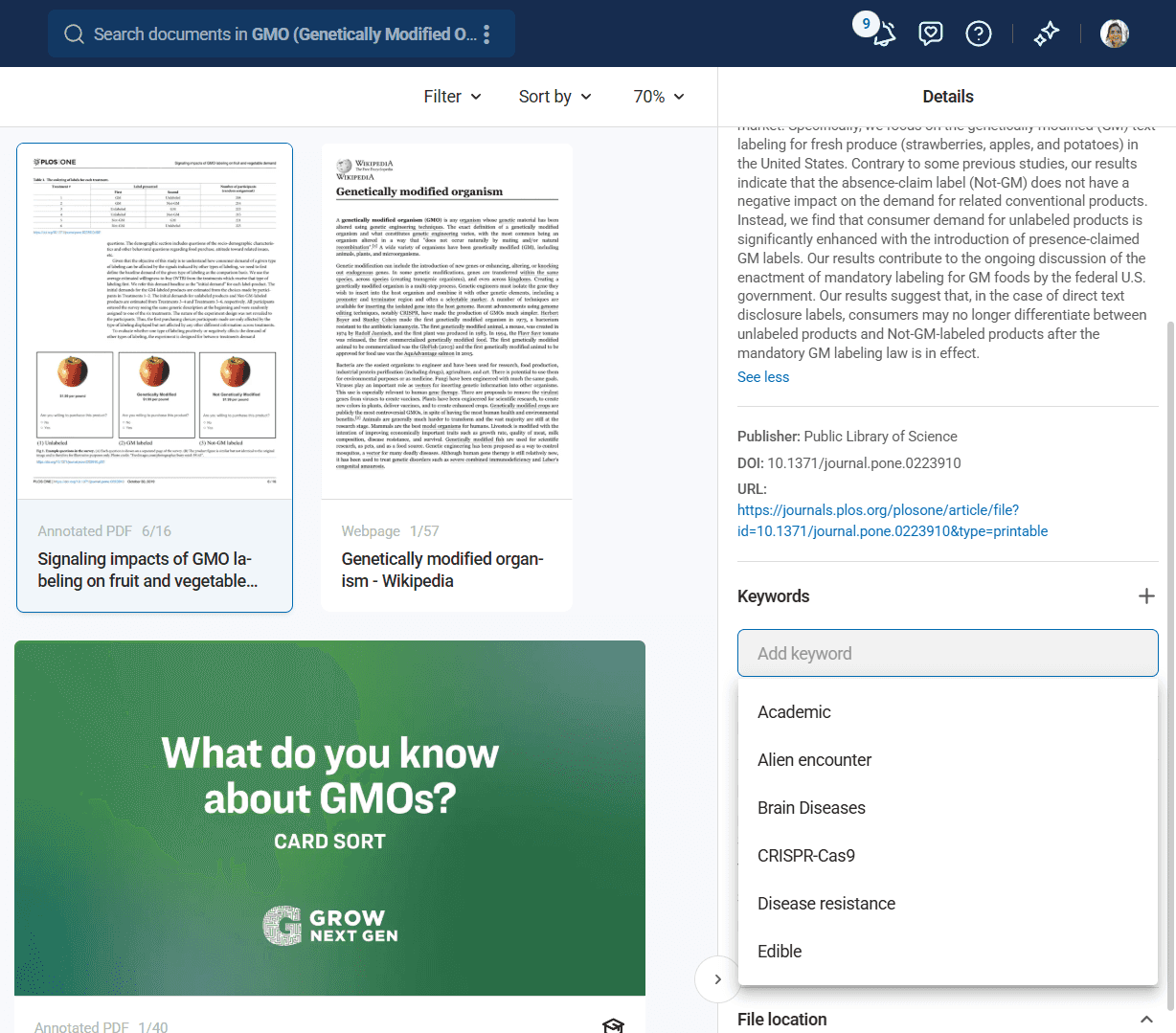
Notes allow you to record your thoughts about documents, track their relevance to specific projects, or note important page numbers and sections for future reference.
File Management and Storage
Understanding how Elumity handles your files helps you make informed decisions about document management and organization.
File Operations
The metadata panel includes a "File Info" section showing the document's filename, file type, size and import date. This information helps you track when you added materials to your library and identify any large files that might be affecting performance.
"Other file options" provides additional file management capabilities. You can rename files (which changes the filename but not the document title), replace files (substitute a new version while keeping the same reference information), or remove files (delete the file while preserving any reference information).
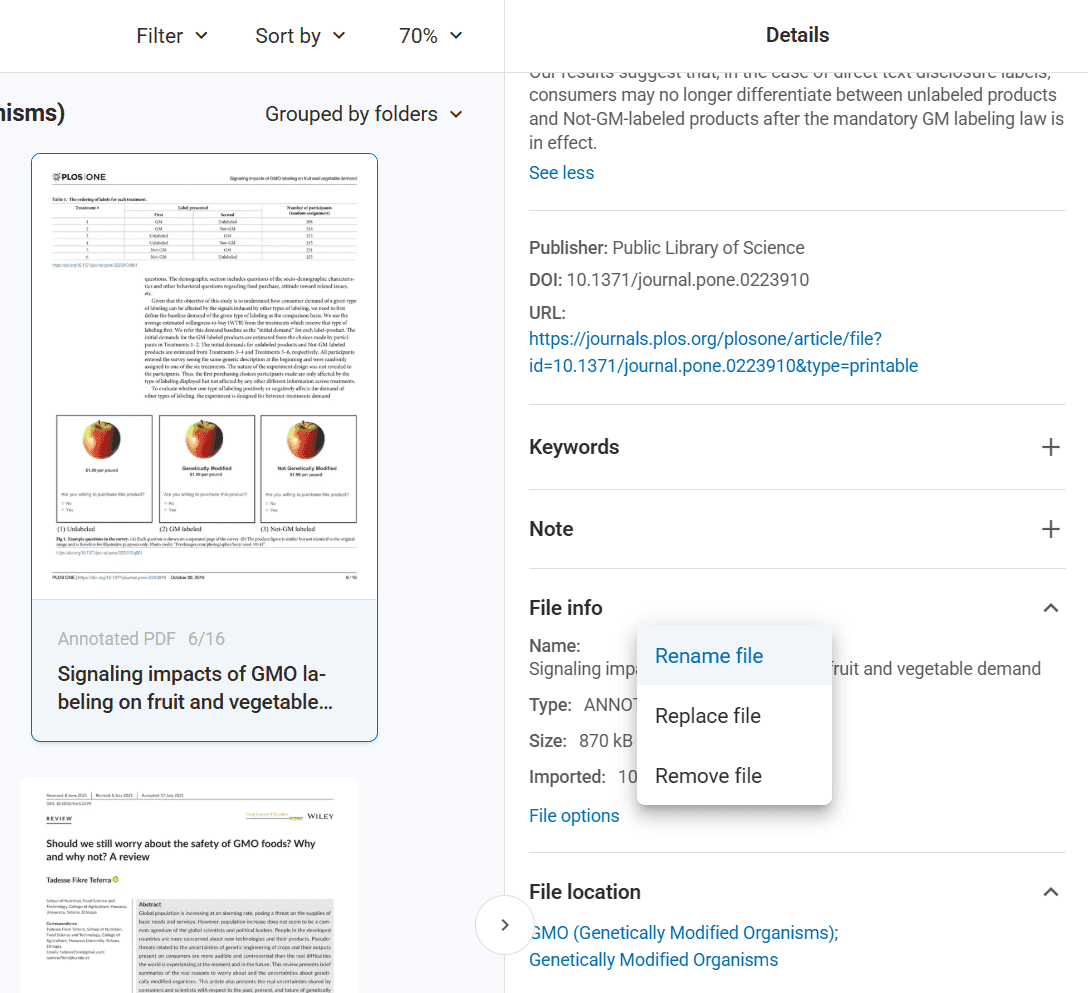
This separation between files and references is important for academic work. You might want to keep citation information even if you need to replace a file with a better version or remove a file due to storage constraints.
Location Tracking
The metadata panel shows exactly where each document is located within your folder and space structure. This "breadcrumb" information helps you understand your organizational system and makes it easier to find related materials.
Working with Different File Types
Elumity handles various file formats and understanding how each type works in the system helps you make the most of your library.
PDF Documents
PDF files are the most common format in academic libraries. They maintain their formatting across different devices and integrate fully with Elumity's annotation and Knowledge Card creation systems.
When you open PDFs in Elumity's viewer, you have access to advanced reading tools including highlighting, note-taking and direct transfer of content to Knowledge Cards.
Office Documents
Word documents, Excel spreadsheets and PowerPoint presentations appear in your Library with appropriate thumbnails and metadata. While these don't open in Elumity's specialized PDF viewer, they maintain their connections to the reference system and can be downloaded for editing in their native applications.
Media Files
Images and videos in your Library can be useful for research documentation, especially in fields like medicine, anthropology, or engineering where visual materials are important research data.
Images show thumbnail previews in the grid view, making them easy to identify. Videos display with play button overlays and duration information.
Search and Discovery
Finding specific documents in a large library requires effective search strategies.
Using the Global Search
The search bar in the main navigation searches across all your content, including document titles, metadata and even content within PDF files. Use specific terms rather than general ones for better results.
Search for author names, specific concepts, or distinctive phrases from papers you're trying to locate. The system searches document content as well as metadata, so you can often find papers by searching for key phrases from their abstracts or conclusions.
Advanced Search Strategies
Combine search terms with filters for more precise results. For example, search for "machine learning" and then filter by PDF documents to find only research papers on that topic.
Use the tag system strategically to create searchable categories. If you consistently tag methodology papers with one tag and results papers with another, you can quickly filter to find the type of information you need.
Collaboration and Sharing
The Library supports both individual research and collaborative work through its sharing and space management features.
Group Spaces
Group spaces allow multiple researchers to share a common library of documents. All members can access, organize and contribute to the shared collection while maintaining appropriate access controls.
When working in group spaces, establish team conventions for folder organization, tagging and document naming to ensure everyone can find and use shared materials effectively.
Document Sharing
Individual documents can be shared with other Elumity users without giving them access to your entire library or space. Use the sharing options in the document menu to send specific papers or resources to colleagues.
Shared documents appear in recipients' inboxes, where they can be viewed and optionally added to their own libraries for permanent access.
Maintenance and Organization
Regular library maintenance ensures your document collection remains useful and manageable over time.
Periodic Review
Set aside time periodically to review your library organization. Remove duplicates, update folder structures that no longer match your research needs and ensure your tagging system remains consistent and useful.
Use the trash system to safely remove documents you no longer need. Documents in trash can be restored if you change your mind, but they don't clutter your active library views.
Storage Management
Monitor your library size using the information available in your user settings. Large libraries might require more thoughtful organization to maintain good performance.
Consider whether you need to keep every document permanently or whether some materials could be removed after you've extracted their key insights into Knowledge Cards.
Integration with Other Elumity Modules
The Library works seamlessly with other parts of Elumity, creating an integrated research workflow.
Knowledge Card Creation
Documents in your Library can be opened directly in Elumity's PDF viewer, where you can create Knowledge Cards while reading. This workflow maintains the connection between your source materials and the insights you extract from them.
Reference Management
Library documents automatically connect to your References module, ensuring consistent citation information across all your academic work. Changes to reference information in one module appear throughout the system.
Next Steps
Now that you understand Library management, explore how your documents integrate with other Elumity features:
- Creating Knowledge Cards: Learn to extract insights from your Library documents
- Citation and References: Master the reference management system that connects to your Library