Using References
Your Reference Library as an Academic Asset
Your reference library in Elumity serves as more than just a collection of citations - it's a curated academic resource that grows in value throughout your research career. Understanding how to effectively use this library ensures you can quickly find relevant sources, maintain citation accuracy and build upon your previous research investments.
The References module connects with your Files and Knowledge Cards, creating a unified system where citation information flows between all aspects of your academic work.
Navigating Your Reference Collection
Access your references through the References module in the main navigation. Your reference collection appears as a searchable list showing essential information for each source: authors, title, publication year and journal or publisher.
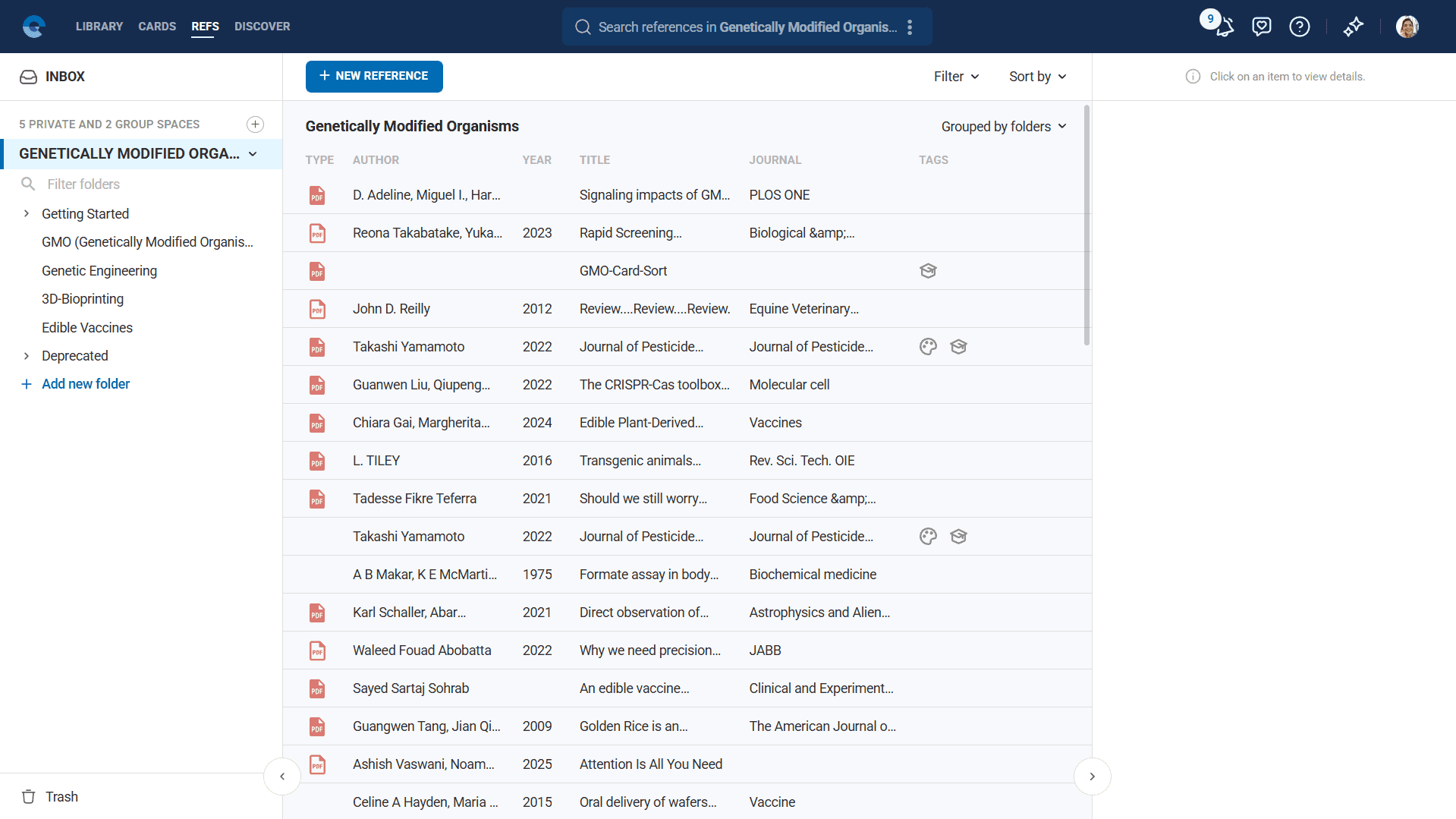
Visual indicators show which references connect to PDF documents in your Files, helping you quickly identify sources where you have full text access versus citation-only entries.
Finding References Efficiently
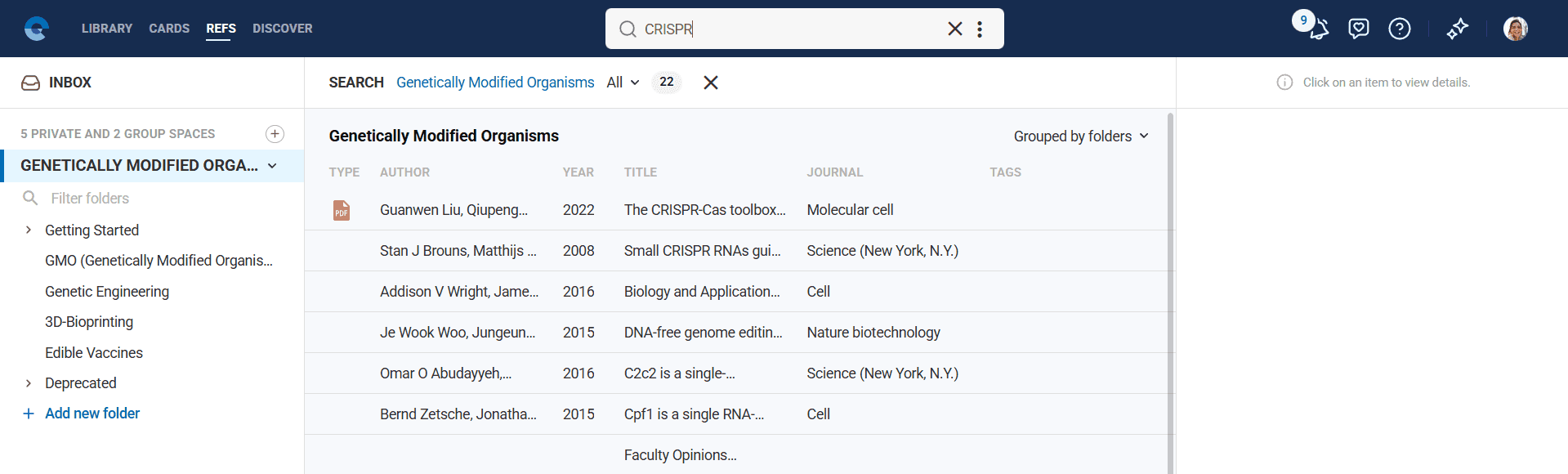
The search functionality in the References module searches across all bibliographic information including titles, authors, keywords and notes you've added to references.
Use specific search terms rather than broad topics for better results. Search for author surnames, distinctive title words, or specific concepts to locate sources quickly. The search includes content from any notes or keywords you've added, making your organizational efforts searchable.
Organizing References for Long-term Use
References follow the same organizational structure as your other Elumity content, using spaces and folders to create logical groupings that match your research workflow.
Managing Reference Quality
Maintaining high-quality reference information requires regular attention to accuracy and completeness.
Citation Accuracy Verification
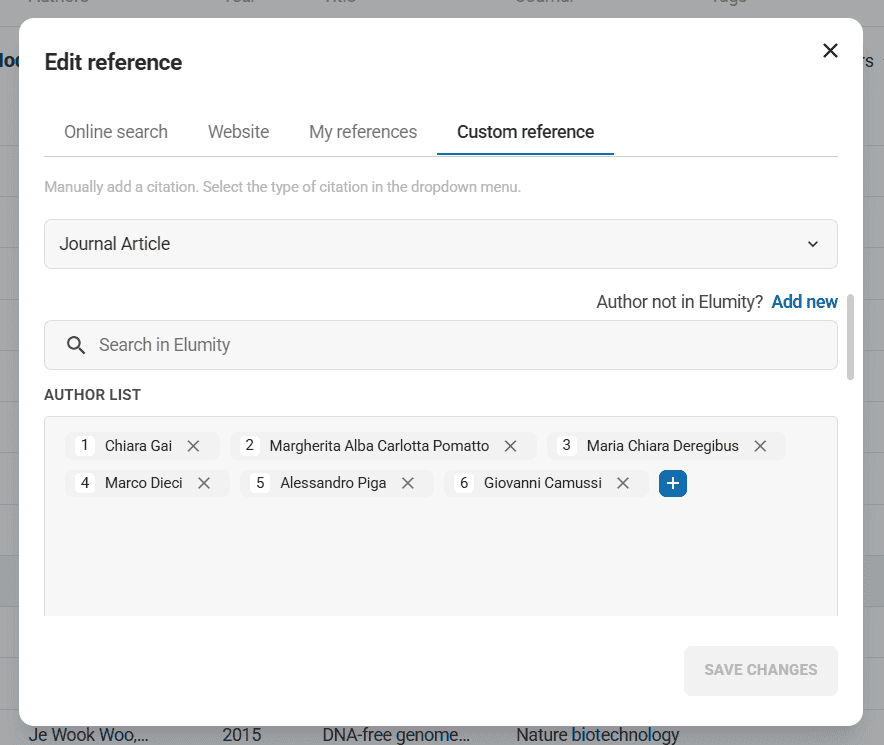
Review imported references to ensure all information is complete and formatted correctly. Pay particular attention to author names, publication dates, journal names and page numbers, as these details affect citation accuracy in your writing.
Use DOI links when available to verify that references connect to the correct sources. DOIs provide permanent links that remain accurate even when publisher websites change.
Linking References to Source Materials
One of Elumity's most valuable features is the connection between reference entries and actual PDF documents in your Library.
When you have both a reference entry and the corresponding PDF in your Library, linking them creates bidirectional access. Click on linked references to open the source document, or access reference information directly from PDF metadata panels.
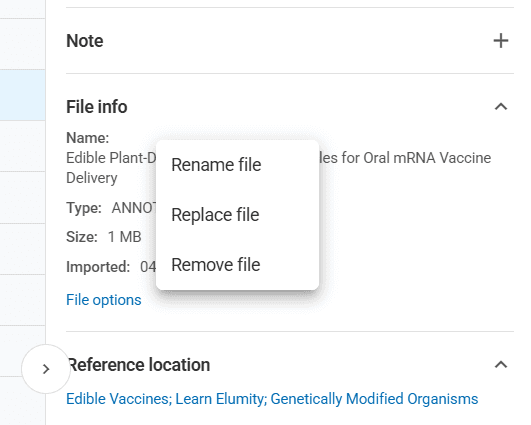
This linking supports verification of quotations and claims during writing while maintaining scholarly connections between your source materials and their citation information.
Collaborative Reference Management
Group spaces include shared reference libraries where team members can contribute and access citations collectively, preventing duplication of effort and ensuring consistency in collaborative projects.
Reference Export and Integration
Your Elumity reference library can export to standard formats including BibTeX and RIS, supporting collaboration with researchers using different tools or integration with institutional systems.
Export options preserve the organizational work you've invested in your reference library while ensuring compatibility with other academic workflows.
Maintenance Best Practices
Regular Library Review
Schedule periodic reference library reviews to remove outdated sources, update citation information for sources that have changed status and ensure your organizational system continues to support your research needs.
Update preprint citations when they become published articles and verify that web-based sources remain accessible.
Backup and Preservation
Your reference library represents a significant investment in scholarly work. Use Elumity's backup features to preserve this intellectual investment and consider how your reference organization supports both current projects and future research directions.
Integration with Knowledge Cards
References connect naturally with Knowledge Cards, where proper citation supports the scholarly integrity of your insights and analysis. Cards can cite multiple sources while maintaining connections to your reference library.
This integration ensures that analytical work captured in cards remains properly attributed to source materials, supporting both idea development and academic integrity throughout your research process.